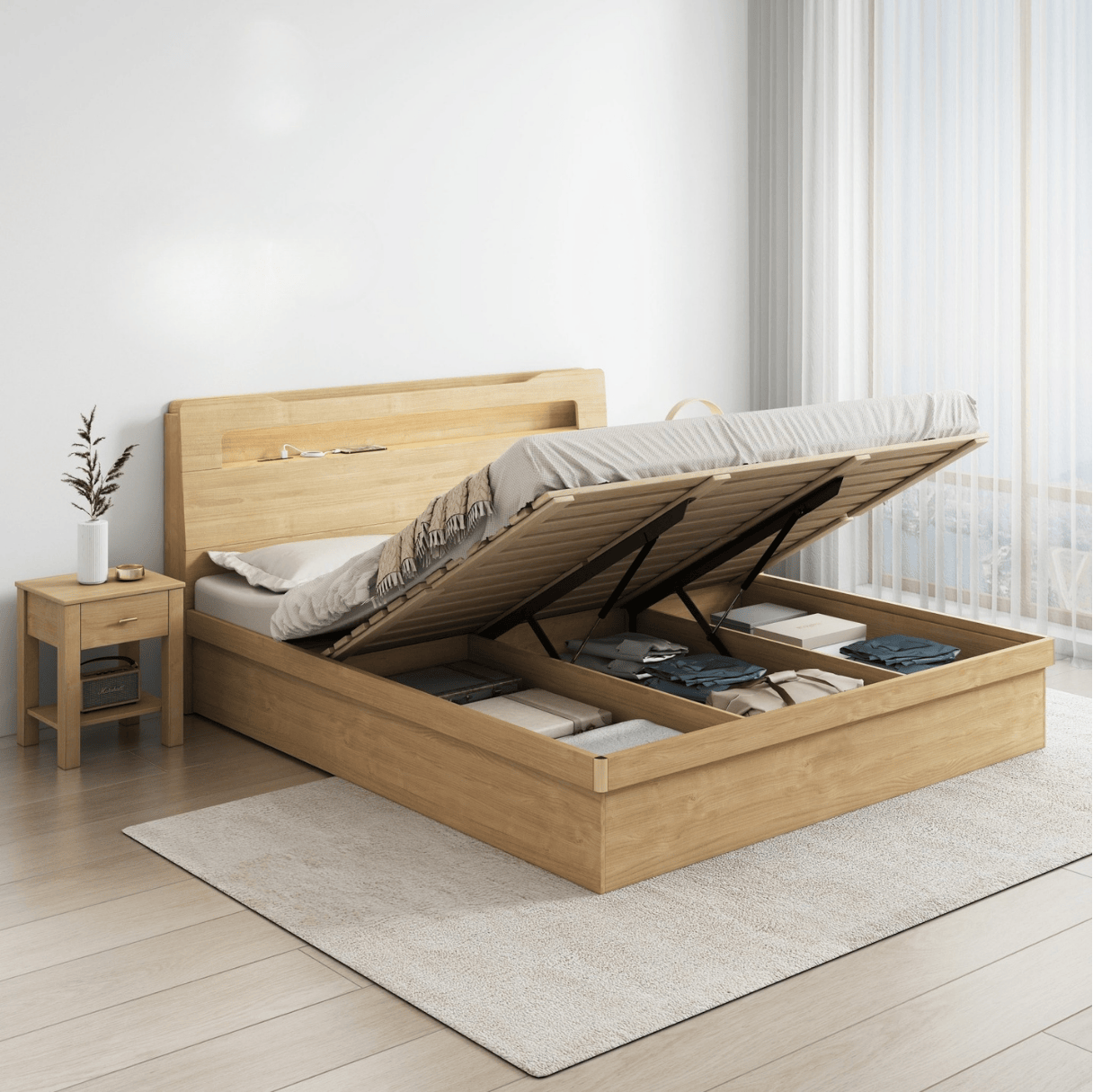



Quick answer: Solid wood is the most durable and longest-lasting — it can be sanded and repaired, handles humidity changes, and lasts decades, but it's the most expensive. Engineered wood (plywood and veneers) is more stable and resists warping at a mid-range price. MDF and particle board are the cheapest and give a smooth painted finish, but they're the least durable and most sensitive to moisture. For furniture you want to keep for years, solid wood is the safest investment.
How the materials compare
| Factor | Solid wood | Engineered wood | MDF / particle board |
|---|---|---|---|
| Durability | Highest | High | Lower |
| Typical lifespan | Decades | Many years | Shorter |
| Moisture resistance | Good (if sealed) | Very good (stable) | Poor — swells if wet |
| Repairable | Yes — sand & refinish | Limited | Rarely |
| Weight | Heavy | Medium | Varies |
| Price | Highest | Mid | Lowest |
When each makes sense
Solid wood — for pieces you want to last: bed frames, dining tables, dressers. Best value over the life of the furniture. Engineered wood — a smart middle ground; plywood is strong and resists warping better than solid timber in some climates. MDF / particle board — fine for budget or short-term pieces and smooth painted finishes, but keep it away from moisture.
Why this matters in Australia
Australia's humidity swings are hard on furniture. Cheap particle board can swell and sag once moisture gets in, while solid wood and quality plywood cope far better. Most Proferlo furniture uses solid wood for exactly this reason. Our timber is FSC-certified (responsibly sourced) and CARB2-compliant (low formaldehyde emissions) — explained on our sustainability page.
How we build our engineered-wood pieces to last
When we do use engineered board, we build it to last. Engineered board really only fails when moisture reaches an unsealed cut edge — so we seal every edge and use higher-grade boards. That keeps moisture out at the most vulnerable point, so our engineered-wood pieces hold up far better than cheap flat-pack furniture and give years of reliable use. Every board we use is also CARB2-compliant for low formaldehyde emissions (healthier indoor air) and FSC-certified for responsible sourcing — so you can shop with confidence whichever material you choose.
Frequently asked questions
Is solid wood better than MDF?
For durability and lifespan, yes. Solid wood lasts longer, resists moisture better and can be repaired. MDF is cheaper and gives a smooth finish but won't last as long.
How long does MDF furniture last?
With care and away from moisture, MDF furniture lasts several years, but it's more prone to chipping, sagging and water damage than solid or engineered wood. Quality construction — fully sealed edges and higher-grade boards — noticeably extends its life.
What is engineered wood?
Engineered wood is timber manufactured by bonding layers or fibres, like plywood or veneered board. It's more dimensionally stable than solid wood and typically cheaper.
Is MDF furniture good quality?
MDF can be good for budget and painted pieces, but it's lower on durability and moisture resistance than solid or engineered wood. Match the material to how long you want the piece to last, and look for sealed edges, which protect the most vulnerable point.
Browse solid-wood ranges: bedroom · living room. Every order ships Australia-wide — online-only, warehouse-direct.